01 / Christmas Eve, 1968

On Christmas Eve, 1968, thirteen-year-old Michael Crow helped deliver food and gifts to a family living in a shack with a tarpaper roof and a dirt floor.

He and another Eagle Scout had filled two U-Haul trucks. Crow’s father drove one dressed as Santa.

That night, Apollo 8 broadcast from lunar orbit. Three astronauts read from the Book of Genesis. NASA estimates that one billion people in 64 countries tuned in.

Crow says the two scenes have stayed with him ever since.
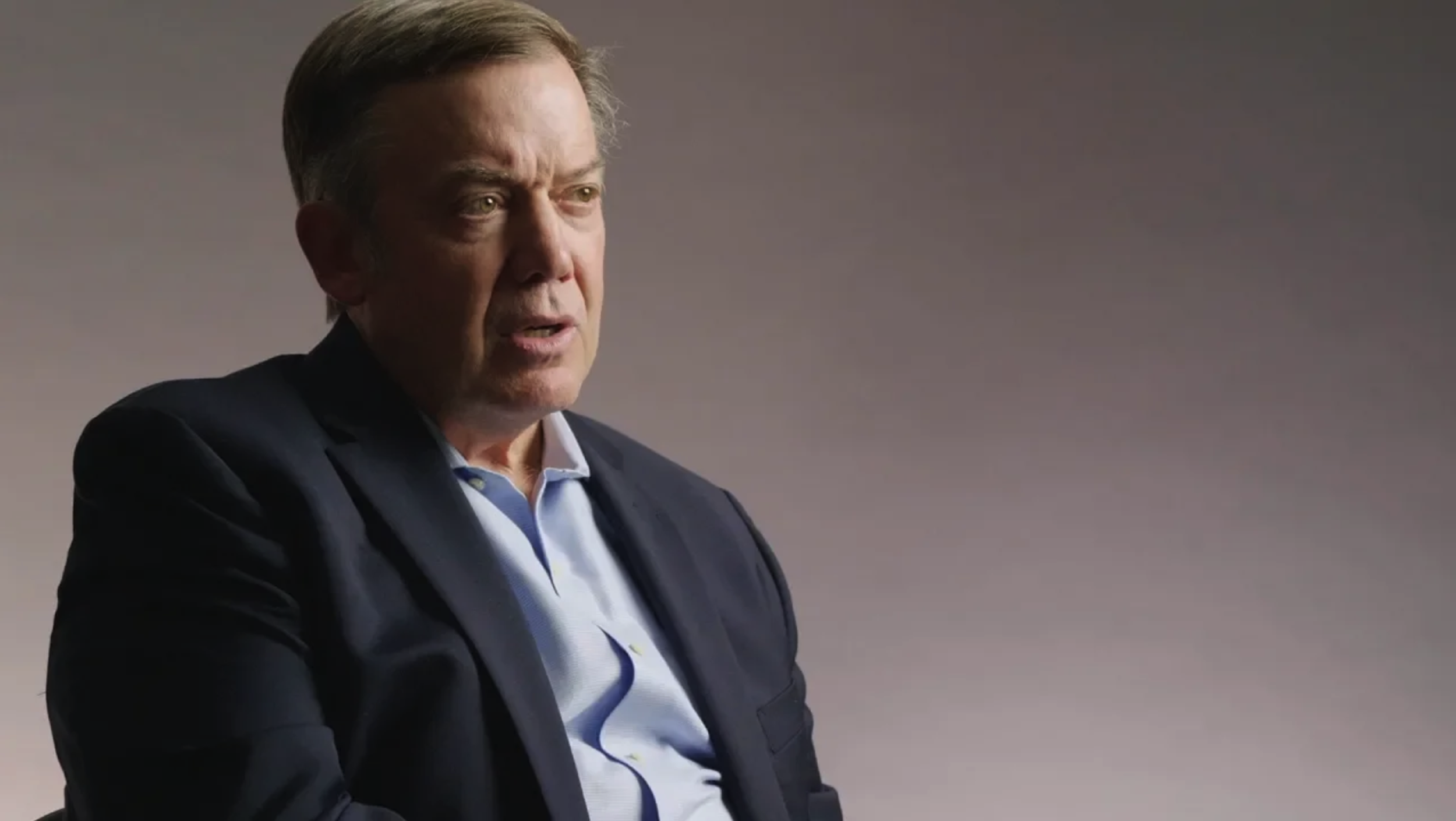
Michael Crow recalling Christmas Eve 1968
Watch · Crow tells the story1:32
That night left him with a question.
Earth rising above the Moon as photographed from Apollo 8 in 1968
Apollo 8 Earthrise · Bill Anders / NASA · December 24, 1968

02 / The question

How could people fly around the Moon while so much human talent went unused on Earth?

Crow came to believe that American public universities had confused prestige with selectivity. A public university, he argued, should not prove its quality by keeping people out. It should open its doors to students from every kind of family, then take responsibility for whether they succeed.

What if excellence did not depend on exclusion?
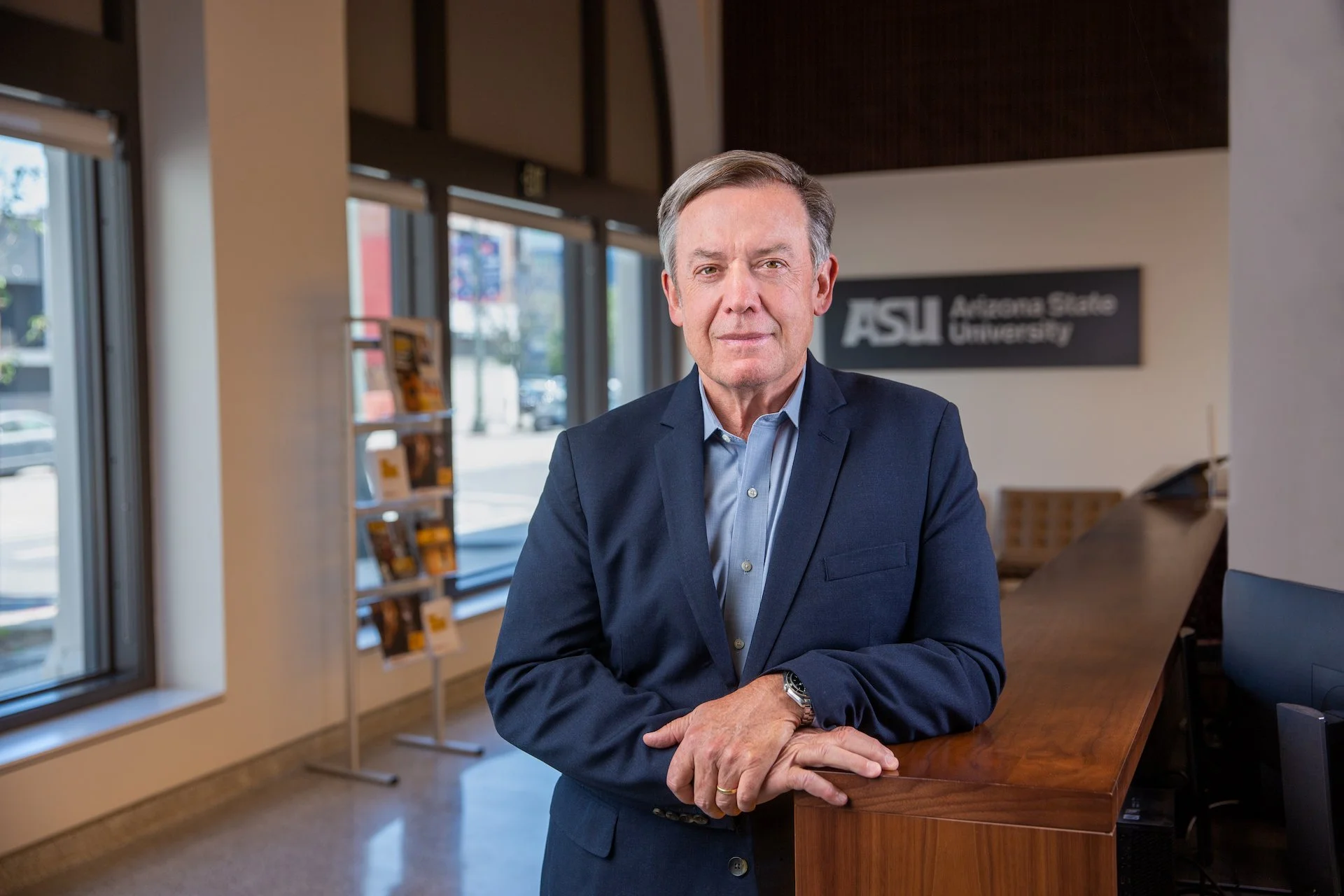
Portrait of Michael Crow
Michael Crow, 2022 · Deanna Dent / ASU

03 / Before ASU

By college, Crow had moved twenty-one times and attended seventeen schools.

His mother died of cancer when he was nine. His father, a Navy sailor, was deployed overseas at the time, so the four children were split among relatives.

Age 9His mother died while his father was deployed. The four children were split among relatives.
21 movesHe moved twenty-one times before college.
17 schoolsHe attended seventeen schools before reaching Iowa State.
1stHe became the first person in his family to attend college.

ASU’s biography calls Crow a “knowledge enterprise architect.” Put simply, he believes a university can be redesigned.

A young Michael Crow standing beside his father, George, who kneels with Michael’s younger brother, David
Michael Crow, left, with his father, George, and brother, David · Memphis, 1958 · Courtesy of Michael Crow

His father believed some lessons had to be seen.

When Crow was young, his father took him to a Chicago morgue to see the body of a man killed in a drunken-driving accident. He also took him to skid rows, where he paid homeless men to tell his son how their lives had fallen apart.

At ASU, Crow focused on what rules did to people. If a math course, an admissions rule or a weed-out culture pushed students away, he wanted the university to change it.

04 / Arizona State University, 2002

In 2002, Crow left Columbia University to lead ASU.

He had built a career in science policy and university leadership, including more than a decade at Columbia. At ASU, he chose to put a specific argument into practice.

Crow saw a system that treated selectivity as proof of quality. His argument cut the other way. A public university should educate the public, then be judged by what happened to the people it admitted. Its research had to matter outside the campus, too.

Still from Michael Crow’s 2002 inaugural address
Watch · 2002 inaugural addressFull original speech
“Measured not by whom it excludes, but by whom it includes and how they succeed.”

05 / What changed

By fall 2024, ASU enrolled nearly three times as many students as it did in 2002.

Enrollment rose from about 52,000 to 152,812. Annual research spending climbed from $123 million in fiscal year 2002 to $1.03 billion in fiscal year 2024, more than eight times as much. Crow wanted ASU to open its doors without giving up serious research.

52,000about 52,000 students in fall 2002
152,812students in fall 2024, nearly three times the 2002 figure
$123M → $1.03Bannual research spending, more than eight times as much

One university had to do this in many places.

ASU teaches students in Tempe, downtown Phoenix, the West Valley, Polytechnic and online. These are not separate universities. Crow’s model has to work across all of them.

Still from a film about Starbucks College Achievement Plan alumni
Watch · Alumni Then and Now1:50

College without leaving work

Starbucks employees can earn their first bachelor’s degree through ASU Online with 100% of tuition covered.

They can study while they work, from wherever they live, with no requirement to stay at Starbucks after graduation. Nearly 20,000 have graduated. Sixty-six percent say they probably would not have earned a degree without the program.

One in five did not qualify for ASU at first. They could take online courses, prove they were ready and earn admission. More than 6,000 have.

Annual engineering degrees 9007,200 about eight times as many in thirteen years Watch Crow explain the redesignFull 2024 UIA National Summit keynote

What happens after admission

ASU stopped treating the first year of engineering as a place to thin the class.

Crow said the engineering school once lost nearly one in three students after the first year. ASU changed its introductory courses, calculus teaching and paths through the program. Thirteen years later, it was awarding about eight times as many engineering degrees each year.

06 / Public trust

While ASU grew, public confidence in higher education fell sharply.

In 2015, 57% of Americans said they had high confidence in higher education. By 2026, that number was 38%. The 19-point drop equals one-third of the 2015 figure. Crow was opening ASU to more people while Americans were losing confidence in higher education as a whole.

07 / Crow’s standard

Crow put the responsibility on universities, including his own.

At the October 2024 UIA Summit, he told leaders from large public universities that, across schools like theirs, more students leave without a degree than graduate.

“There are no excuses, none.It’s us. We did that.It is failure for our sector to drop out half the people that attend.”

He did not blame students for leaving. He told the universities in the room to change the courses and rules that push students out, and he included ASU in the criticism. Later in the same talk, he stated the standard directly:

“If you’re not graduating your students, I’m sorry, you are a failure.”

For Crow, admitting more people is only half the job. In the same address, he said a student’s chance of success at ASU still depends in part on how much their family earns. By his own standard, the university still has work to do.

Michael Crow speaking about why universities are responsible for helping students graduate
Watch · Crow’s standardUIA National Summit · excerpt

08 / The larger test

ASU shows how much one university can change. The harder question belongs to the country.

In 2014, ASU and ten other large public research universities formed the University Innovation Alliance. When one university found a way to help more students graduate, the others could test it, adapt it and build it into their own systems. By 2025, the alliance had nineteen member universities.

19member universities in the alliance by 2025
183,500more graduates than earlier trends predicted, according to the alliance
43.1Mpeople in the United States had attended college but had not earned a degree or certificate at the start of 2023-24

The alliance says its members have produced 183,500 more graduates than their earlier trends predicted. The national gap is still much larger. At the start of the 2023-24 academic year, 43.1 million people in the United States had attended college but had not earned a degree or certificate.

09 / The question that remains

More than two decades in, Crow says ASU still has work to do.

ASU enrolls nearly three times as many students as it did in 2002. Research spending has passed $1 billion. Crow also says a student’s chance of success at ASU still depends in part on how much their family earns. He does not offer the first two facts as an excuse for the third.

ASU is one university. Can American higher education still change?

Sources and media

Where each part of the story comes from

All links sit here so the story above can move without footnotes. Each entry names the scene, number or quotation it supports, along with the video used on the page.

Opening · Christmas Eve 1968 and Apollo 8

The Eagle Scout project, two trucks and the tarpaper-roofed shack

Crow says he and another Eagle Scout collected food, Christmas gifts and toys, filled two U-Haul trucks and delivered them on Christmas Eve. His father drove one truck dressed as Santa. Crow describes the family’s home as a shack with a tarpaper roof and a dirt floor, then connects the visit to the Apollo 8 broadcast later that night.

Michael Crow · first-person accountPrimary

The Genesis reading and the size of the audience

NASA records the Christmas Eve broadcast and the crew’s reading from Genesis. Its historical account estimates that one billion people in 64 countries tuned in.

NASA · Apollo 8 in lunar orbitPrimary
Formation · family, education and working style

Twenty-one moves and first-generation college

Crow’s first-person account says his family moved twenty-one times. It also describes how he became the first in his family to attend college and arrived at Iowa State with less than ten dollars and a Boy Scout trunk holding everything he owned.

Michael Crow · first-person accountPrimary

His mother’s death, his father’s deployment and seventeen schools

Crow says his mother died when he was nine and his father was deployed overseas with the Navy at the time. The four children were split among relatives. In the same interview, he says he attended seventeen schools and moved twenty-one times.

LEADERS · interview with Michael CrowInterview

The silent drive, morgue and skid rows

The 2015 profile reports the 350-mile drive to Iowa State without a word between father and son. It also recounts George Crow taking his son to a Chicago morgue to see a man killed in a drunken-driving accident and paying homeless men on skid rows to explain how their lives had fallen apart.

The Chronicle · The Making of a Higher-Ed AgitatorIndependent

Career before ASU

Crow’s curriculum vitae documents his work in science policy and university administration, including his years at Columbia, before he became ASU president in July 2002.

Michael Crow · curriculum vitaePrimary
The 2002 argument · access, excellence and one university

The measure of inclusion and success

ASU’s charter page provides the exact language shown above and the university’s official statement of its public mission.

ASU Charter, Mission and GoalsPrimary

Access and excellence in the same institution

Crow and William Dabars describe the inherited prestige model and their argument that broad access and research excellence can reinforce each other.

Issues in Science and Technology · The Fifth WaveAuthored
Growth and what happened to students

152,812 students in fall 2024

ASU’s Office of Institutional Analysis reports 152,812 students for fall 2024. Because both enrollment figures describe a fall term, the page can make the nearly threefold comparison directly.

ASU Institutional Analysis · fall 2024Data

Starbucks: tuition coverage, nearly 20,000 graduates and another way into ASU

Eligible U.S. employees can earn their first bachelor’s degree through ASU Online with 100% of tuition covered upfront and no requirement to remain at Starbucks after graduation. The 2026 update reports nearly 20,000 graduates and says 66% likely would not have earned a degree without the program. It also says one in five were not initially eligible for admission and more than 6,000 earned their way into ASU through online courses.

Starbucks · College Achievement Plan updateProgram Starbucks · education benefitProgram details

Starbucks alumni in their own words

ASU’s existing 1:50 film follows program alumni from their time as students to where they are now. It appears with the Starbucks story.

ASU · Alumni Then and NowVideo
Public trust and Crow’s standard

“There are no excuses” and the graduation standard

The transcript identifies the audience as leaders from large public universities, gives the passages in order and includes Crow’s statement that family income still affects a student’s chance of success at ASU.

University Innovation Alliance · keynote transcriptPrimary
The larger test beyond ASU

ASU as one of eleven UIA founders

ASU’s 2014 announcement identifies the university as a founding member. The universities set out to test changes together and spread the successful ones, with a focus on helping more low-income and first-generation students graduate.

ASU News · UIA founding announcementInstitutional

183,500 additional graduates across nineteen universities

The alliance’s 2025 report gives the member count and says its institutions produced 183,500 additional graduates beyond projected baselines. The page attributes that estimate to the alliance.

University Innovation Alliance · 2025 annual reportReport

43.1 million people without a degree or certificate

The National Student Clearinghouse Research Center counts people in the United States who had attended college but had not earned a degree or certificate by the start of the 2023-24 academic year.

National Student Clearinghouse · 2025 reportIndependent